|
Safety Switches
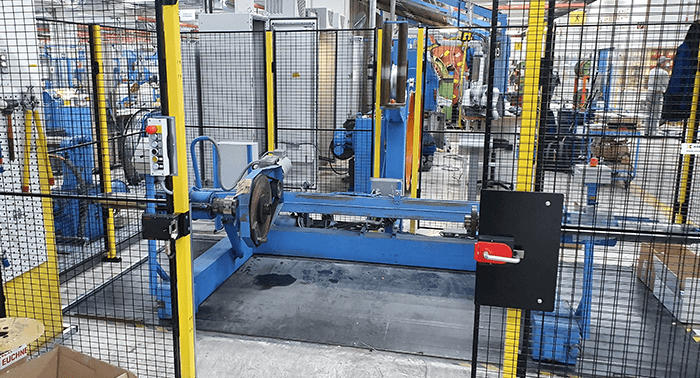
Safety switches have the task of preventing the operation of a machine in the case of a potential hazard. This task is defined in EN 1088 (Safety of machinery. Interlocking devices associated with guards. Principles for design and selection). For this purpose the safety circuit must be opened by the safety switch. Safety switches are therefore key elements of an interlocking device.
In general, a differentiation is made between safety switches with safety function (design type 1 safety switches) and safety switches with separate actuator (design type 2 safety switches).
For safety switches positively driven contacts are used in the switching elements. These are special switching elements that are designed to ensure the switching contacts are always reliably separated. Even if contacts welded together, the connection is opened by the actuating force. It is a common feature of all switching elements that at least one switching element is designed as a positively driven contact. Often two positively driven contacts are employed to increase safety using the principle of duplicated design (redundancy). This dual-channel design ensures that on the failure of one channel or on a fault in the control circuit (i.e. in the machine wiring), the interlocking can still be provided with the aid of the second channel.
|
| |
 |
 |
 |
 |
 |
 |
 |
 |
 |
 |
 |
| |
Design Type 1 with integrated actuator
Features an integrated actuator to protect personnel and equipment by monitoring the position of movable components. Actuator movement opens positively driven safety contacts. Reinforced thermoplastic (NM Design Type 1) and die cast aluminum (NZ Design Type 1) versions available.
|
|
|
|
Design Type 2 with separate actuator and locking
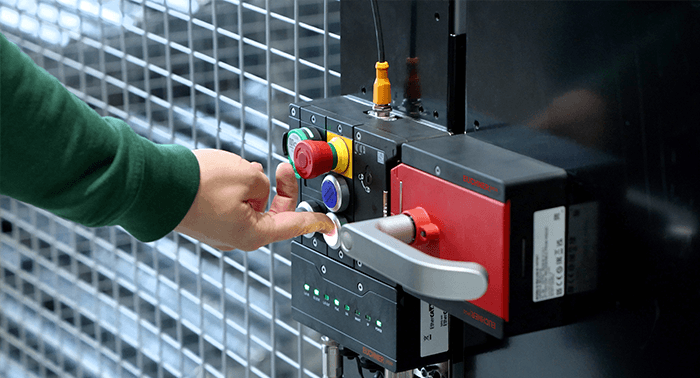
Features an actuator that separates from the switch body. Inserting the actuator into the switch head closes the safety contacts (NM, NP, GP, NZ). The TP, STP, TZ or TX series integrate a solenoid to hold the guard closed until elimination of stored energy hazards.
STP Extended:
Switch permits integration of control and display elements in the switch. |
|
|
|
Design Type 2 with separate acutator without locking
|
|
|
 |
 |
 |
 |
 |
 |
 |
 |
 |
|
| |
|

Your shopping cart is empty


Get Started Now!


Search Site!
Site Tools
|